Saturday, December 14, 2013


      Bacteria Episode II: Attack of the Antibiotics

 This is the era of the Bacteria Wars and the antibiotics(clone troopers) are losing against the bacteria(battle droids) because of the huge upgrade that mutated them into stronger bacteria(super battle droids) that allowed them to grow and thrive.  Just kidding. Anyway, this time we are gonna get more in depth about bacteria.


From last week, we learned about bacteria and what their characteristics are. Bacteria can be helpful and beneficial because bacteria can allow humans to digest their food properly. They can be ingredients in yogurt, cheese, etc. They can recycle dead organisms and decompose them. They can fix nitrogen which is a nutrient plants need. Believe it or not, some of the bacteria can be in some of the antibiotics. The antibiotics are fed to the animals even when they are not sick. This causes them to have growth hormones.    LINK


 Stomach Bacteria Treatment                         

Stomach bacteria


How nitrogen fixing bacteria benefits plants and animals is they turn atmospheric nitrogen into ammonia and they are inorganic compounds which the plants can utilize. How they benefit animals is that the nitrogen can go back to the atmosphere and can help with breaking down organisms by bacteria carrying it.
The Nitrogen Cycle Illustrated


The nitrogen cycle


Pasteurization is partial sterilization of foods at a certain temperature that destroys harmful microorganisms. How it is important is it destroys disease inside of milk primarily and it adds to the longevity(how long it will be until it goes bad) from causing the milk to go bad.LINK


                                          pasteurized milk


You can't escape bacteria beacause they are everywhere. Some bacteria can be harmful and can cause human disease. For example, the three bacterial infections are tuberculosis, pneumonia, and strep throat. Tuberculosis is caused by mycobacterium tuberculosis and the symptoms are coughing up blood ands loss of appetite. Strep throat is caused by streptococcus bacteria and the symptoms are high fever, sore throat, and fatigue. Pneumonia is caused by hemophilus influenzae and the symptoms are vomiting, shortness of breath, fever, and coughing. LINK


Women with pneumonia

All of you guys may have heard of the word antibiotics. First of all let me explain what antibiotics are, antibiotics is what doctors developed to cure people that are sick. But over the years
antibiotics became less affective to bacteria, because one, the overuse of antibiotics became less useful and two, bacteria started to mutate and become resistant to antibiotics.


Photograph of various pills

 
See ya guys later and have a merry christmas and a happy new year.


Saturday, December 7, 2013


                                Bacteria
              
                Hello guys and welcome back to my latest blog post about the microscopic world of bacteria.:)


               Let's start off with what bacteria really is. Bacteria are microorganisms that are prokaryotic( as mentioned in my previous blog posts). The cell structure contains:

  • pili- they have hair like structures that can transfer DNA to another bacteria.
  • basal body- which can anchor the base of the flagellum and allows it to rotate.
  • capsule- a layer in the outside of the cell wall.
  • cell wall- a layer membrane outside of the plasma membrane LINK 
  • cytoplasm- a jelly like substance that contains ribosomes and genetic material are located
  • flagellum- a long whip like structure in which it allows the bacteria to move.
  • plasma membrane- a membrane located inside the cell. It generates energy and transports chemicals
  • ribosomes- small organelles rich in RNA.


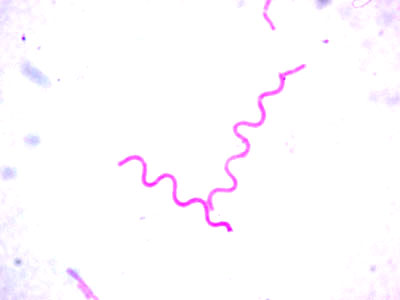
Many bacteria come in all different shapes and sizes. The can be rod shaped, spiral shaped, or sphere shaped. The spiral shaped ones usully look like party streamers. They can move by using their whole body . Rod shaped bacteria look like bars. They move by using their flagellum or cilia. Finally, sphere shaped bacteria look like spheres and they use the same movement as the rod shaped ones.


File:Spirillum.jpg

Bacilli Bacteria


               bacilli


spirilla


Also fission is when two bacteria reproduce sexually or asexually (as mentioned in my previous posts) and split into more bacteria.


Binary fission


fission


How bacteria obtain food and energy is thet they are heterotrophic, which means that they get food from other organisms. They can trap other organisms. They can make their own food(autotroph) by using photosynthesis. They can even make food and energy using the power of the sun.


You probably might be wondering about why eubacteria and archaebacteria are classified differently. Because they have different chemicals and RNA. Eubacteria can make their own food and they can add oxygen to the atmosphere.they can't live in extreme environments. Archaebacteria can consume or make their own food. They can survive in hostile environments like volcanos, acidic environments and deep ocean vents. Some of them can live inside of you. They can help break down the food in your intestines.


Well, see ya later.


Friday, November 22, 2013


                                                        Ants on Guard

https://student.societyforscience.org/article/ants-guard


                      In the Summer in 2001, John Styrsky went into the rainforest and suddenly, He bumped into something which is an acadia tree and felt stinging sensations. he took off his shirt and found 15 ats swarming all around the shirt and kept on biting him repeatedly. the ants did that to protect there home which is the tree. What it turns out is ants live inside trees and they create a symbiosis of them and the plants. The plantsd can help out the ants in a way. Ants cut down plants that harm their home. As I go on, ants can guard the type pf tree called the tangarana. no plants grow near it so the ants have to guard the tree. they cut off the leaves with their mandibles and ate insects and other animals. they also eat the sugars and fats that the plants produce. So, in conclusion, ants do protect plants.


The story happened in the summer in 2001. it didn't have anything to do with past events or anything. This issue just got posted on the website. this event also occured in the Borneo rainforests in Indonesia.

The story can be important because it can show the people that ants can be territorial. It can also show them that ants can help the plants live. I chose the article because it's interesting and can provide more info about ants. Also as the story develops it can probably show how the ants got the instinct to protect the plants.


So, Why do ants protect the plant?

Because they can create a symbiosis with them and they can help the plant live. Also, they can eat the plant's sugar's and fats that the plant produces by photosynthesis.


Saturday, November 16, 2013


                       Protists part II: Algae

                          Hey guys and welcome back on the sequal of the microscopic world of algae.:) We are gonna be talking about how and what they are like.

                       
http://botany.si.edu/references/dinoflag/

                 How plant like protists have the same aspects as plants are, they have chlorophyll as mentioned in the previous blog posts. They rely on photosynthesis which is the conversion of light into their own food called glucose, and they make up some multi celled organisms like kelp. How they are different is that they don't have stems, they don't have roots, and they don't have leaves.


                  Y'all might be wondering about what groups of algae are fit into that group. There are six groups of algae. The most common one is green algae which can rely on photosynthesis. The can also give out half of the world's oxygen. red algae can get some of the sunlight and live deep under water. brown algae can be used as ingredients for chocolate pudding and toothpastes. they can also be depicted as seaweed and kelp. diatoms contain a substance for gold called silica. Euglenoids have a salt water food chain. Finally, dinoflagellates cause the red tide and is the most dangerous type of algae.


Well, some of the important uses algae can do for the environment is green algae can give out half of the world's oxygen as mentioned in the paragraph above.XD. Brown algae can help out the environment too by providing ingredients for pudding and toothpaste.
 
 
well, see ya guys later


Sunday, November 10, 2013


                                Protozoa

                   Hey guys and welcome back to my geniune blog on one of the fascinating things in the microscopic world


                   The characteristics that the protists share are that they are mostly animal like organism because of how they move and they eat other organisms too. The animal like protists can't make their own food.  Some of them can be fungus like and can suck the nutrients from other organisms. Finally, the plant like protists like kelp and plankton can reproduce by using the process called photosynthesis


Scientists do classify the protozoa by the movement of the protists. There are four types of protists based on how they move. One is the amoeboid, which moves by changing shape. Second is the ciliate, which moves by their cilia (which are tiny hairs on the sides). Third is the sporozoa, which are parasitic and don't move for most of their lives. Finally, the flagellum, which moves by the flagella(whip that works like the propeller).


Amoeboids use pseudopods to eat. flagellates use their flagella to digest their food. The cilia is the only group of protozoa that have the micronuclei and the macronuclei. Sporozoa are parasitic and they cause harm to the host. they are all parasitic and symbiotes.


The importance of some protozoans are that they can be helpful to humans and other living things. How they can help other organisms is by helping the host digest its food. Others can harm the host by spreading through contact of other organisms like malaria, a disease that can cause death and can be spread by mosquitoes.


Well, some protozoans cause diseases.  Malaria is the most well known one they can cause as I explained above. The symptoms are fever, headache, and vomiting but the symptoms don't start until 4 weeks. More symptoms are coma life long learning disabilities and death.


See ya guys later.


http://www.atlanticpestsolutions.net/mosquitos-ticks/


http://www.cartage.org.lb/en/themes/sciences/botanicalsciences/majordivisions
/kingdomprotista/Protists/protists.htm

http://www2.estrellamountain.edu/faculty/farabee/BIOBK/biobookdiversity_3.html

http://www.malarianomore.org/pages/what-is-malaria?gclid=COnNzp_22roCFUPl7Aod0GIA9Q

Saturday, October 19, 2013


                      The Upside of Cheating
                  
                    by: Stephen Ornes 5:22 pm October 2, 2013 


This article is about the people who cheat feel a buzz and the buzz may encourage them to cheat again. How scientists figured it out is the people that cheat usually feel guilt or shame and they get an emotional high after cheating. But that's not all, Scientists recruited 179 volunteers for a test of cheating. Their job is to unscramble as many words as possible in under 4 minutes. After the test they were told to tear off the sheet stapled to the test sheet and keep the test sheet. Each person conducted the test in private and 10 participants cheated on that in a room that the volunteers took in. After that, the scientists asked the 10 participants how they felt, and participants felt a surge through positive emotions such as happy, excited, or proud for example.


I felt pretty interested in that topic. The topic did have some psychological and mental teachings about cheating and what feelings you have when you cheat. Just so you know guys, don't cheat, because it's bad for tests and for life.


See ya guys later.


https://student.societyforscience.org/article/upside-cheating

Saturday, October 5, 2013

Why Leaves change color


                    Why Leaves Change color

Hey guys and welcome back to my very own blog :D. Today were gonna be talking about why leaves change color and how they do that.


Well as all of you guys know from my previous blogs change color by the green pigment chlorophyll. It's job is to capture the sun's light rays and moves the sun's molecules to the stomata that creates glucose. Interesting fact is that glucose is found in many different types of fruit. The chlorophyll reflects  green light and absorbs red and blue light.


The reason why trees stop producing chlorophyll is because the weather got cooler and days are getting shorter and their is fewer sunlight. When the leaves in the tree change color the chlorophyll conceals the two pigments carotenoids which produce yellow, orange, and brown colors and anthocyanins which produce red, pink, and purple colors. The foods that have carotenoids are pumpkins and bananas and anthocyanins apples and grapes.


How these colors change in the fall is the trees respond to the changes of the weather and leaves start to say goodnight to the sun for a few months.


What happens to the leaves in the winter is they fall off of the tree because of the water within the cells of the stem of the leaf. But evergreen trees don't lose leaves because of the waxy coating and the fluids inside the cells contain a substance that resists freezing.


Well see ya later haters.


http://answers.yahoo.com/question/index?qid=20070801191740AAvu0Yc

http://www.chm.bris.ac.uk/motm/chlorophyll/chlorophyll_h.htm

http://www.123rf.com/photo_7050083_globe-and-green-leaves-with-drop-of-water-eco-concept-illustration.html

http://dnr.wi.gov/eek/veg/trees/treestruecolor.htm